The metal
The metal sets the ring's color, weight, durability, and upkeep schedule. Four real contenders:
| Metal | The honest read |
|---|---|
| 14k gold | The most popular engagement choice in the US, and the best balance of durability, color, and price. Yellow flatters warmer color grades (I, J), white needs a rhodium re-dip every one to three years to stay bright, and rose gets its pink from copper, which also makes it tough. |
| 18k gold | Richer, deeper color from higher gold content. The tradeoff is a softer metal that scratches a little more easily. |
| Platinum | The forever metal: naturally white with no plating ever, 95 percent pure so it's hypoallergenic, and dense enough to grip a stone more securely over decades. It costs the most, weighs the most, and develops a soft satin patina that any jeweler can polish away (though plenty of owners grow to love it). |
| Palladium | Platinum's lighter sibling: naturally white, and worth pricing against platinum on the day you buy. The catch is that fewer jewelers work with it, which complicates resizing and repairs later. |
Here is the same ring in each of the five, face up and from the side. Only the metal changes, so what you are looking at is the color difference and nothing else.
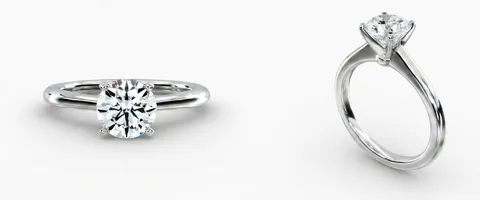
Platinum
Naturally white and the heaviest of the five, so it grips a stone hardest. It never needs plating, and it dulls to a soft satin any jeweler can polish back.
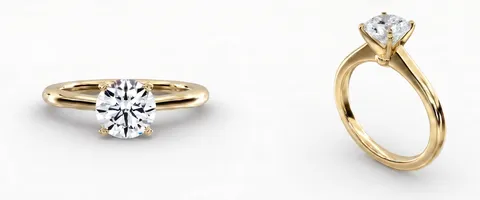
Yellow gold
The classic warm gold, and the easiest to resize. It flatters a warmer color grade, so an I or a J looks perfectly white in it.
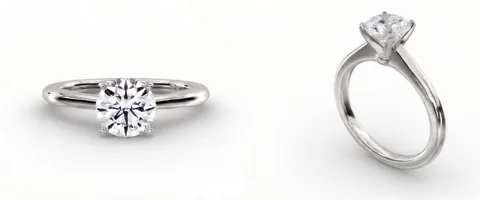
White gold
A gold alloy plated with rhodium for the bright white. Costs less than platinum up front and wants a re-dip every year or two.
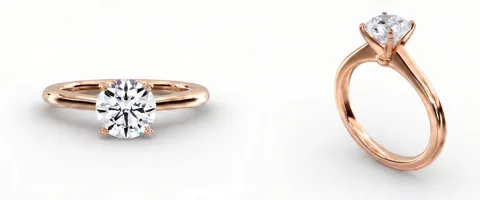
Rose gold
The pink comes from copper in the alloy, and the copper also makes it the toughest of the golds. The color is permanent, not plated.
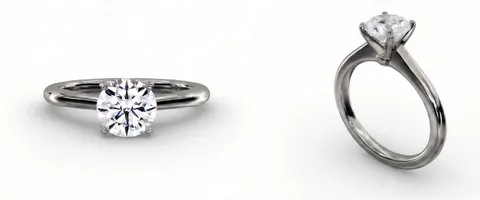
Palladium
Naturally white like platinum and noticeably lighter on the hand. Fewer jewelers work with it, which complicates resizing later.
The setting
The setting is the framework that holds the center stone and gives the ring its personality. Here's the full vocabulary, so you know what a jeweler means when he says it. Each one is shown face up and from the side, because the side is where a setting's real shape lives.
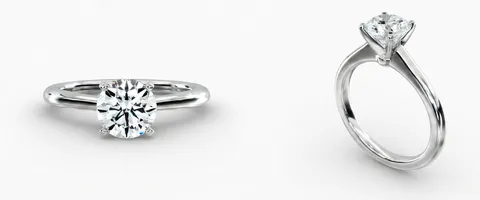
Solitaire
One stone on four or six prongs, with nothing to distract from it. The timeless choice for the woman who believes less is more.
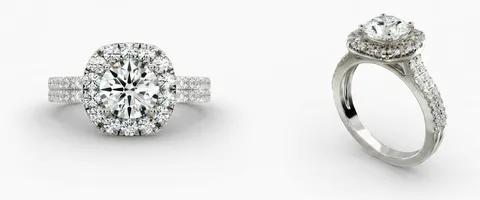
Halo
A circle of tiny pavé diamonds around the center that makes it look up to half a carat larger. The best wow factor per dollar of any setting here.
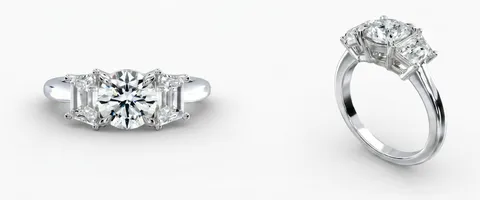
Three-stone
The traditional read: past, present, and future on one band. For the sentimental romantic who wants a story in her jewelry.
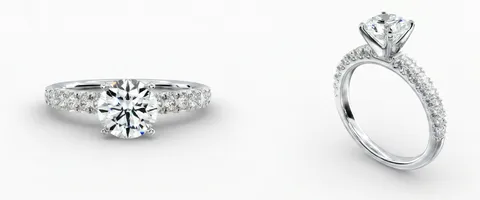
Pavé
The band itself encrusted with tiny diamonds in one continuous glittering surface. Adds fire to almost any style.
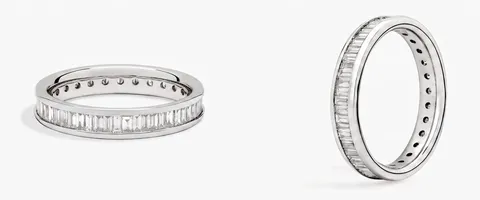
Channel-set
Band diamonds tucked into a smooth channel with no prongs. Modern and secure, and kind to gloves and sweaters.
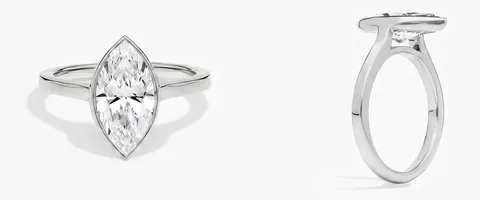
Bezel
A metal rim wrapping the stone's whole edge. The most protective setting there is, with a sleek modern profile. First pick for hands-on jobs and active lives.
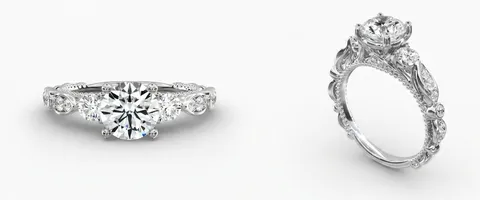
Cathedral
Arches rise off the band to carry the stone, the way a cathedral lifts a ceiling. Scalloped edges and fine beadwork give it an inherited feel without pretending to be old.
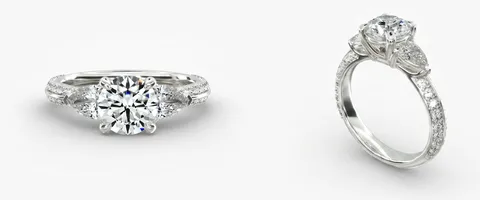
Basket
The stone sits down inside a cradle of metal instead of perching on top of it. It wears lower, slides under a glove, and reads softer than a tall head.
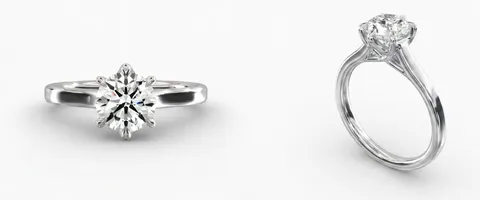
Trellis
The prongs cross underneath like woven branches, so the head looks grown out of the band rather than clamped onto it.
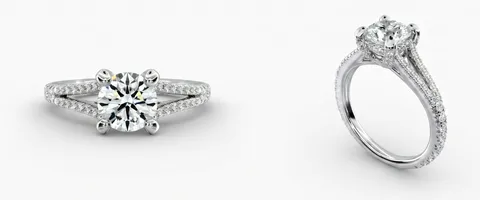
Split-shank
The band parts as it nears the stone and joins again beneath. It opens up the top of the ring and makes the center read larger.
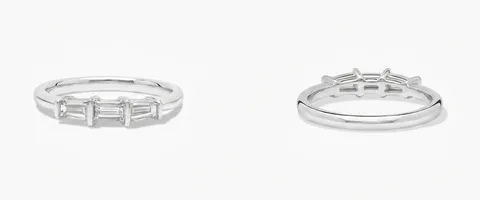
Bar
Straight bars of metal hold each stone with the sides left open, so light gets in from every angle. Clean, architectural, and easy to wear every day.
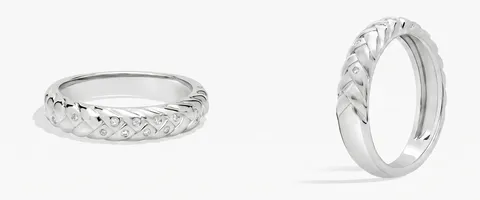
Flush
Stones sunk into the metal so nothing stands above the surface. There's nothing to catch, which makes it the quiet workhorse for hands that do things.
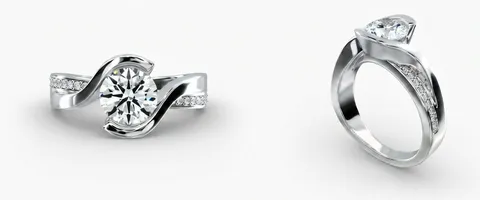
Tension
The stone held by the spring pressure of the band alone, floating with metal at just two edges. Modern and a little startling, and worth a jeweler who builds them often.
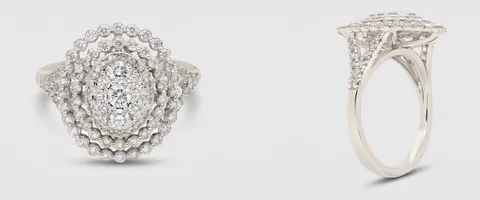
Cluster
Many small stones arranged to read as one large one. It buys presence for a fraction of what a single stone that size would cost.
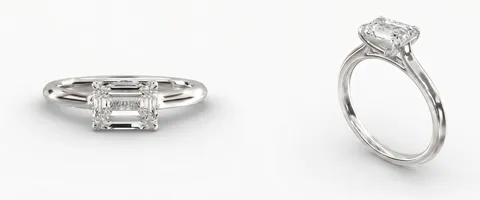
East-west
The stone turned on its side to lie across the finger instead of along it. It makes a familiar shape look deliberate.
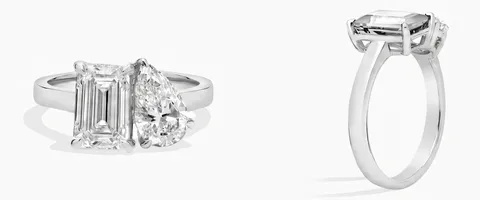
Two-stone
Two stones side by side, often in different shapes, for the couple who'd rather the ring say us than past, present, future.
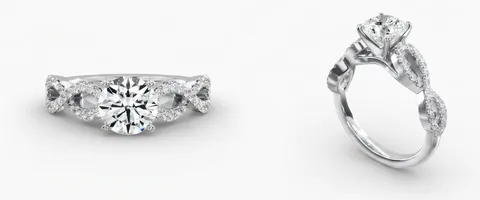
Infinity twist
The band splits and winds around itself before it reaches the stone. Romantic without being fussy, and the twist carries a lot of pavé.
Designer, non-designer, or custom
A designer ring buys a recognizable style and a name, and sometimes the box itself is part of the proposal. Tiffany, Tacori, and Verragio are the names you'll hear. Expect a real premium over an identical-quality ring without the label.
The non-designer path is where most guys land: independent jewelers and online retailers, where your money goes into the stone and the making of the ring instead of a marketing budget.
Custom gets you a ring nobody else has. The cost is time: consultations and renderings come before the four to six weeks a custom setting takes to make, which is why the ring gets ordered at least two months before the day.
Lab-grown or natural
Both are real diamonds. A trained gemologist can't tell them apart without specialized equipment, because the only difference is origin: one formed in the Earth's mantle more than a billion years ago, the other grew in a machine that replicates the process. What changes is the money and the meaning. Lab stones run 70 to 85 percent less for the same size and quality, so the same budget buys a noticeably bigger or better stone. Natural stones hold a portion of their resale value and carry the billion-year story; lab resale value is very low and still falling.
The short version of the decision: if she values tradition and rarity, go natural. If she values size, guaranteed conflict-free origin, and bang for the buck, go lab. Listen for her lean the same way you did for shape. The full head-to-head, with all four deciding factors, lives in our honest comparison.
Beyond the diamond
Diamonds are the tradition, and traditions are optional. A colored gemstone can make the ring deeply personal: her birthstone or her favorite color, or any meaning that fits your story. The one hard constraint is durability, because this ring gets worn every day for a lifetime. Hardness runs on the Mohs scale, diamond sits at 10, and for daily wear you want 7.5 or higher.
The worry-free picks are sapphire and ruby, both at 9: sapphire in velvety blue, pink, yellow, or green, ruby in its fiery red, and neither ever needs babying. Emerald and morganite (both around 7.5 to 8) are beautiful and workable with a protective bezel setting. Below that line the compromises stack up: amethyst sits just under the floor at 7, opal cracks with temperature swings, and pearl scratches under ordinary dust. Gorgeous stones, wrong job.
The silicone second ring
One modern add-on we recommend to everyone: a silicone band as the metal ring's bodyguard. Around machinery, in healthcare, at the gym, in the garden, a metal ring risks catching, and silicone is designed to break under extreme force and save the finger. It also covers the swell that comes with hot days or travel or pregnancy, stands in perfectly while the real ring is out for resizing, and removes the theft worry on trips. Present it after the proposal with one sentence: you want her to be able to carry the symbol everywhere. Specialists like Enso and QALO make finishes that pass for metal at a glance.
Questions we hear the most
White gold or platinum, if the look is the same?
Budget and maintenance decide it. White gold costs less up front and needs a quick rhodium re-dip every year or two. Platinum costs more once and never needs plating, grips the stone harder, and suits sensitive skin. For an active lifestyle or a forever-and-done temperament, platinum earns its price.
Can I mix a warm metal with a high color grade?
You can, and it's a smart play in reverse: with yellow or rose gold, drop the color grade to I or J and bank the savings, because the warm band hides the faint tint completely. Paying for D-F color under yellow gold is money the metal immediately erases.
You know exactly what to buy. Now where, and on whose terms: Part 4, Where to Buy and How Not to Get Played.
Build the spec, then the shortlist.
Her metal, the setting, and every stone on your shortlist, saved side by side in the free app's Ring Studio.
Open the Ring Studio