Two things to know before you scroll. First, every stone below is the same size, because a scale that quietly grows a stone is teaching you the wrong lesson. Only the grade changes. Second, you're looking at these on a screen, several times larger than a real ring on a real hand, in even light with nothing else competing. That's the hardest possible test, and it's a useful one: what you can barely find here, she'll never find at dinner.
The clarity scale, IF down to I1
Clarity grades the natural flaws inside a stone, called inclusions. The scale runs eleven steps from Flawless to I3. Here are the eight you'll actually be offered.
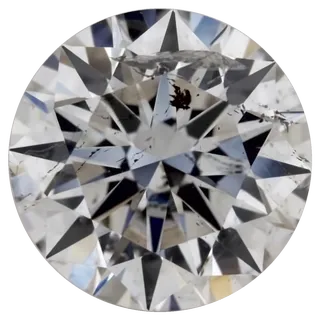 I1
I1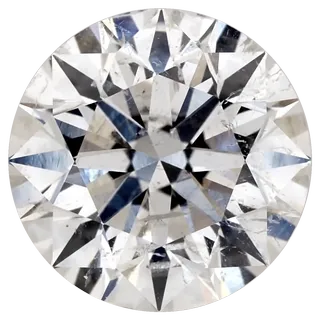 SI2
SI2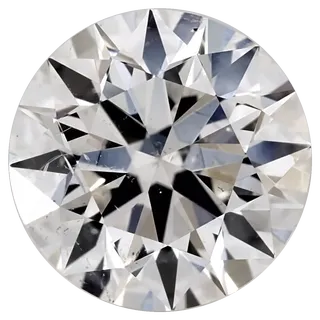 SI1
SI1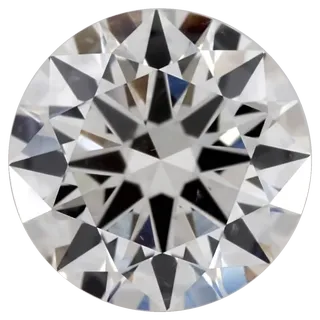 VS2
VS2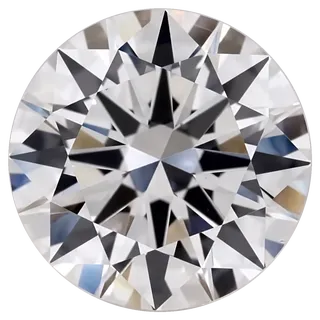 VS1
VS1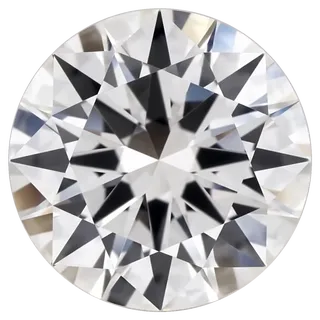 VVS2
VVS2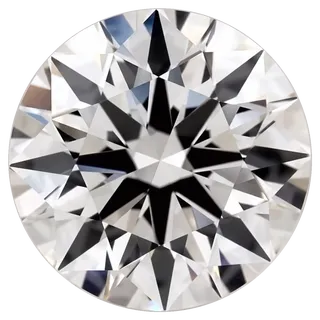 VVS1
VVS1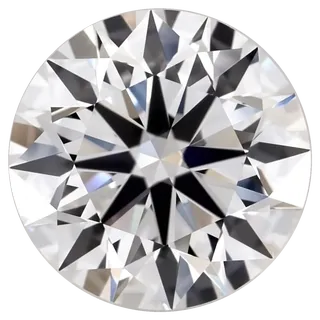 IF
IFEight clarity grades, one size. VS2, labeled in gold, is the grade to aim for.
Look at the last four. VS1, VVS2, VVS1 and IF are a wash at this size, and they're a bigger wash on a hand across a table. That flat stretch at the top of the scale is the single most expensive thing in diamond shopping, because the price is climbing hard the whole way and nothing you can see is changing.
Now start at the other end. I1 is what "included" means: a dark crystal near the top, feathers scattered through it, all of it visible without any help at all. By SI2 the marks have stopped hiding. SI1 is the budget stretch, and it's a real one, but look closely and you can start picking marks out. Some SI1 stones are clean to the eye and some aren't, which is why that grade needs your eyes on the actual stone rather than your trust in the letter. Then VS2, where you should be aiming: the flaws are in there, and they stay out of sight.
Eye-clean: no flaws you can see without magnification. That's the whole target, and VS2 hits it almost every time. Everything above VS2 buys a cleaner certificate, not a cleaner-looking ring.
The color scale, K up to D
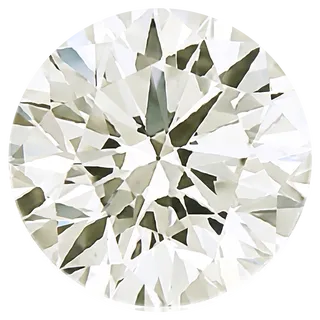
Color grades run backwards from how you'd expect: D is colorless and the alphabet gets warmer from there, all the way to Z. Nobody shops at the far end, so here's the stretch you'll be quoted.
 K
K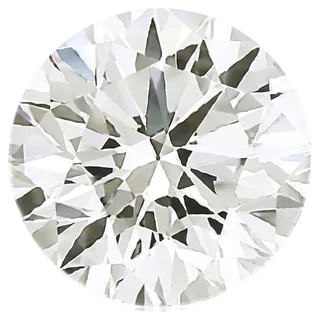 J
J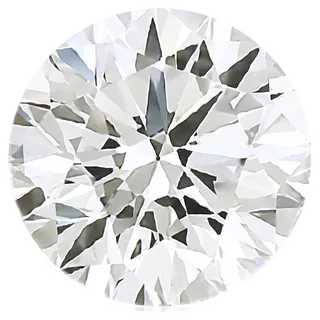 I
I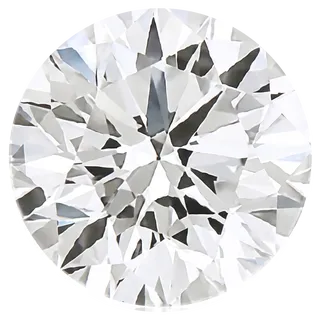 H
H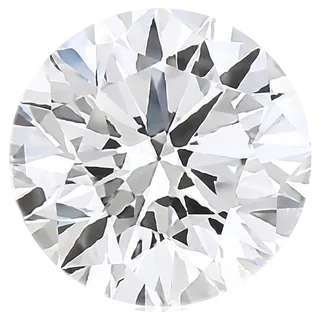 G
G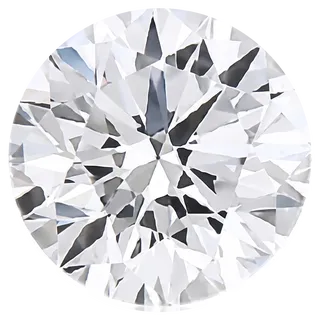 F
F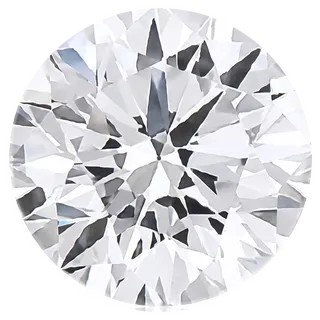 E
E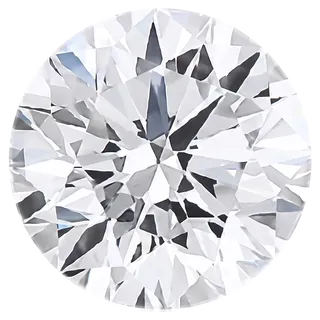 D
DEight color grades, one size. G and H, labeled in gold, are where the value lives.
Same story, different letters. At K the warmth is simply there, and you don't need anyone to point at it. It thins through J and I, and by H it’s gone: E through H is a very quiet stretch, and the two grades labeled in gold cost dramatically less than the two above them for a difference you're currently squinting to find on a backlit screen.
One thing the face-up view can't show you: color hides underneath. Graders turn a stone upside down and look through the side, because that's where body color pools and shows itself. You'll never see the stone that way again after the day it's set.
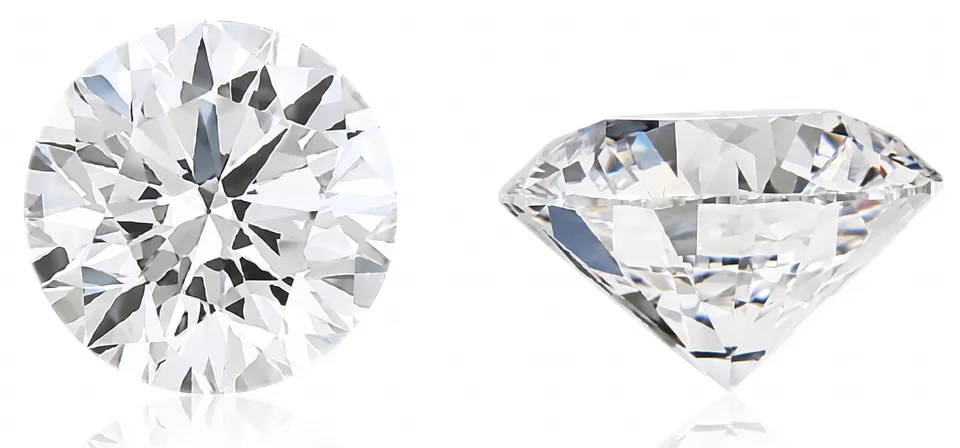
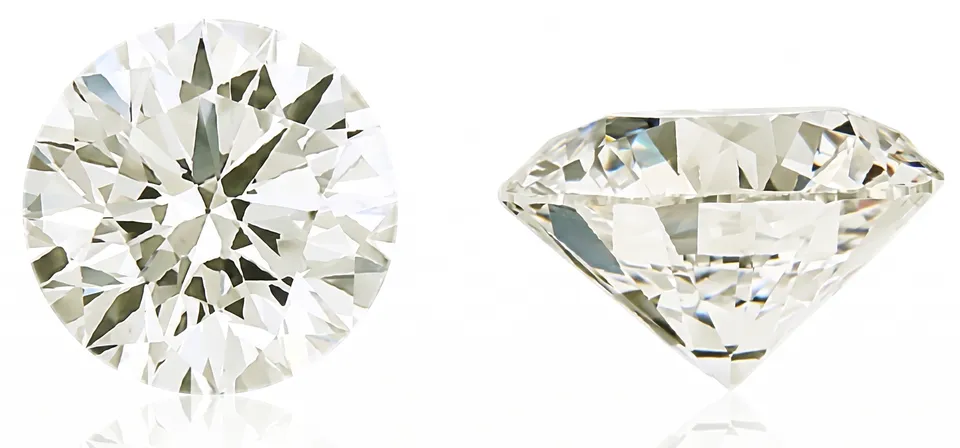
That's the case for buying G or H and stopping: face up, on a hand, in a room, the warmth at those grades has nowhere to go. And if you're setting the stone in yellow or rose gold, drop to I or J on purpose. Warm metal against a faintly warm stone reads as one intentional thing, and the money saved buys a better cut or more weight.
Reading the two together
Neither scale is a quality ranking you should climb as far as your budget allows. Both are price ladders with a flat spot near the top, and the whole skill is spotting where the flat spot ends. On clarity that's VS2. On color it's G to H. Spend past those and you're buying letters.
What you should climb is cut, which neither of these charts covers, and which decides more about how a ring looks than color and clarity together. A well-cut stone throws enough light to bury a faint tint and hide a small inclusion. A badly cut one can't be rescued by anything on either scale. Part 2 of the Masterclass makes that case properly.
Top cut grade. G or H color. VS2 clarity, checked with your own eyes. Carat weight just under the magic sizes. Run that in every search filter before you spend a dime, and read how much to spend first so you know which number you're filling.
Questions we hear the most
Can you really not see the difference between VVS1 and VS2?
Not with your eyes, no, and that's the point of the word eye-clean. Under a jeweler's 10x loupe the difference is obvious and the grader's job is real. On a hand, in a restaurant, at the distance people actually look at a ring, both stones are simply clean. You're paying for the loupe view, and the loupe stays at the jeweler's.
Is an SI1 safe to buy?
Sometimes, and never sight unseen. SI1 covers stones that are perfectly clean to the eye and stones that aren't, so the grade alone doesn't answer it. Study the 360-degree video, look for dark spots or a cloudy patch near the middle, and check the report's clarity plot to see where the flaws sit. A flaw out near the edge can end up hidden under a prong; the same flaw under the center of the table is the one you'd notice later.
Is a D worth the premium?
Almost never. D is the top of the color scale, and it carries the biggest premium on the sheet for a difference that needs a master set of comparison stones and a trained grader to call. If you want the very top for its own sake that's a fine reason, but it's a collector's reason, not a value one.
Do lab-grown stones use the same grades?
The same scales, graded the same way. What changes is the price, which is low enough that the higher grades stop being a stretch, so plenty of people buy up the scale simply because they can. The cut rule doesn't move: hold out for the top grade whatever the stone's origin. Lab-grown or natural walks the whole decision.
Grades understood, the rest of the ring is waiting: the full 4Cs and the shapes, then metal and setting, and how to read the report when a stone gets serious.
Compare the stones you're actually looking at.
The free app's Ring Studio gives every stone on your shortlist a row: shape, grades, price, cert number. Move one grade and watch the price move with it.
Open the Ring Studio